

EMDR Trauma Therapy
Catholicized.
I’ve taken this to prayer and tried therapy but this pain just won’t go away…
Your pain is not spiritual failure
Trauma doesn’t just live in our thoughts—it gets locked in our nervous system. When a painful experience occurs, the brain can store that memory incorrectly, leaving your body stuck in a constant state of vigilance.
You can’t think (or pray) your way out of trauma
At CURA, you’re invited to a space where your mental health and Catholic faith are treated as a unified whole so you can truly flourish

Healing from Trauma or PTSD calls for more than clinical skill—it requires a trained guide who understands the wholeness and sacredness of your interior life
Cecilia Wanner brings a unique depth of theological and psychological training to her practice. Having studied at the Franciscan University of Steubenville and holding a Masters degree in Counselling from Briercrest Seminary, her work is firmly rooted in an authentic Catholic understanding of the human person.
As a professional Catholic therapist specializing in EMDR (Eye Movement Desensitization and Reprocessing) and trauma recovery, Cecilia creates a compassionate, nonjudgmental space to help you process life's heaviest challenges. She understands that while our souls are sustained by grace, our psychological and physical faculties can still carry the raw, exhausting wounds of past experiences.

“Many people struggle to share their story or seek support because of confusion, exhaustion, or a feeling of being completely stuck. I utilize EMDR because it respects the brilliant way God designed our bodies and brains to heal—allowing us to safely clear the neurological pain and fog of trauma so you can reconnect with your God-given dignity, clarity, and direction.”
Q: Does time heal all wounds?
A: Sometimes, kinda, maybe… no.
Cecilia’s 3-Step Catholic Healing Process
1. Assess Trauma Storage

When we experience an overwhelming or traumatic event, the brain can become overloaded, storing it incorrectly—trapping the raw emotions, physical sensations, and negative beliefs in the nervous system. Later, a simple trigger can repeatedly cause those old emotions to flood back, making a past event feel completely present.
Healing begins when we recognize how the nervous system overloaded while categorizing memories and install resources to help support the process.
2. Bilateral Stimulation (No Hypnosis or New Age)

Using simple, non-invasive tools—like guided eye movements or gentle, alternating handheld pulses—Cecilia activates both the left and right hemispheres of your brain. This mimics the natural processing that happens during REM (Rapid Eye Movement) sleep, the state in which your brain naturally processes and categorizes the day's events.
EMDR does not use deep trances or subconscious manipulation. Instead, it relies entirely on physical biology, cooperating with the natural healing mechanisms God designed within your body.
3. Physical Reprocessing
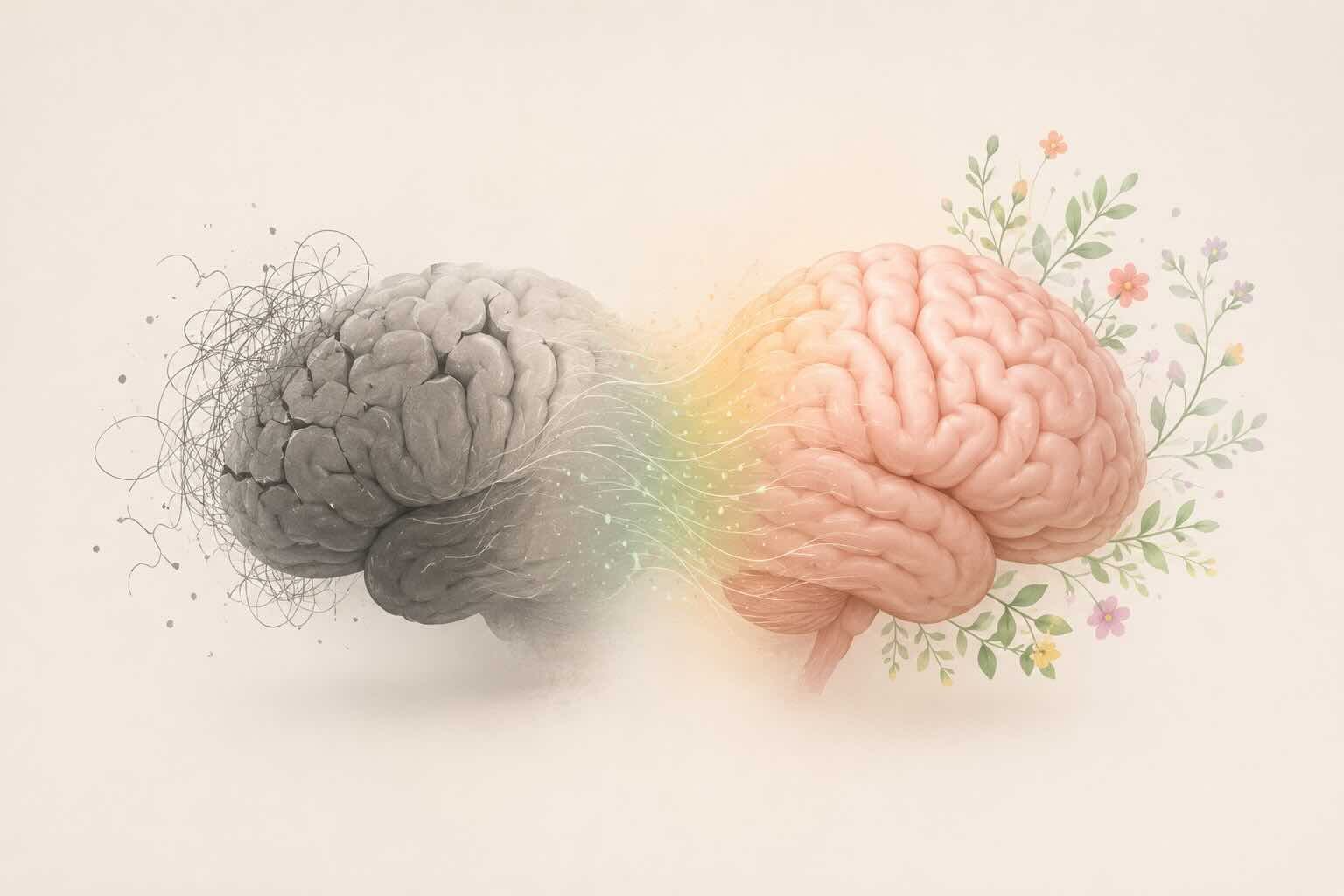
As the brain engages both sides, it safely re-routes and archives the painful memory. The memory remains, but the physical distress, anxiety, and emotional sting, and negative thoughts are stripped away.
EMDR is a clinically proven, biological therapy that unlocks those stuck memories so your body can finally rest.
At CURA, our Catholic approach to trauma treatment is more than simply EMDR with a crucifix on the wall and a guarantee of no energy crystals or dream catchers.
Catholic EMDR is rooted in the conviction that Jesus Christ is the true healer
Psychological healing reaches its fullest potential when it is integrated with the spiritual realities of the human person.
What Makes Catholic EMDR Different?
-

It recognizes both natural and supernatural health
Trauma can impair our natural emotional and neurological faculties, leaving us stuck in fear, shame, or despair. EMDR works on this natural level by helping the brain and nervous system process memories that have become “stuck.” As those obstacles are removed, the supernatural life of grace and the virtues can flourish more freely. Rather than competing with faith, sound psychological treatment can prepare the ground for deeper spiritual growth.
-

It doesn’t just heal our memories, it heals our relationship with God
Trauma changes the way we see ourself, others, and the world, but it can also distort the way we see God. A traumatic experience may silently teach us that God is not faithful or good. Unfortunately, a wounded understanding of God often spills over into a wounded understanding of ourselves and our neighbour. Healing these distortions can restore our capacity to receive God’s love and to live the call to charity.
-

It respects the spiritual dimension of suffering
At CURA, we recognize that reduction of suffering is not necessarily the result of healing— suffering and healing are two sides of the same coin. Some traumatic experiences raise questions that are as spiritual as they are psychological. “Where was God when this happened?” or “Why did He allow it?” These questions are explored thoughtfully and respectfully within the richness of the Catholic tradition, helping clients seek not only emotional relief but deeper truth.
-

It recognizes that healing has an ultimate end
Conventional EMDR often aims to reduce distress and improve day-to-day functioning. Those are worthwhile goals. But toward what end? From a Catholic perspective, healing is not merely about feeling better. It is about becoming more fully alive in the person God created you to be and becoming freer to love and serve Him and others.

At CURA, we believe authentic healing involves the whole person: body, mind, heart, and soul. By integrating clinically excellent EMDR with a faithful Catholic understanding of the human person, we seek not only relief from painful memories but greater freedom to live with courage, to love with generosity, and to walk more confidently toward union with God.